What I learned not building my own teleprompter
January 22, 2026
The Bright Idea
I had a problem: video production was taking too long. Every time I sat down to record, I’d stumble over my words, forget my script, or lose my train of thought. The solution? A teleprompter. You know, that nifty device that scrolls your script in front of the camera so you can read it while looking straight at the lens. It’s the secret weapon of polished YouTubers, news anchors, and anyone who wants to sound like they know what they’re talking about.
I looked up the prices. Ouch. Even the basic models cost more than what I wanted to invest. “How hard can it be?” I thought. It’s just a glass plate wrapped in some black cloth, right?
The $2 Prototype
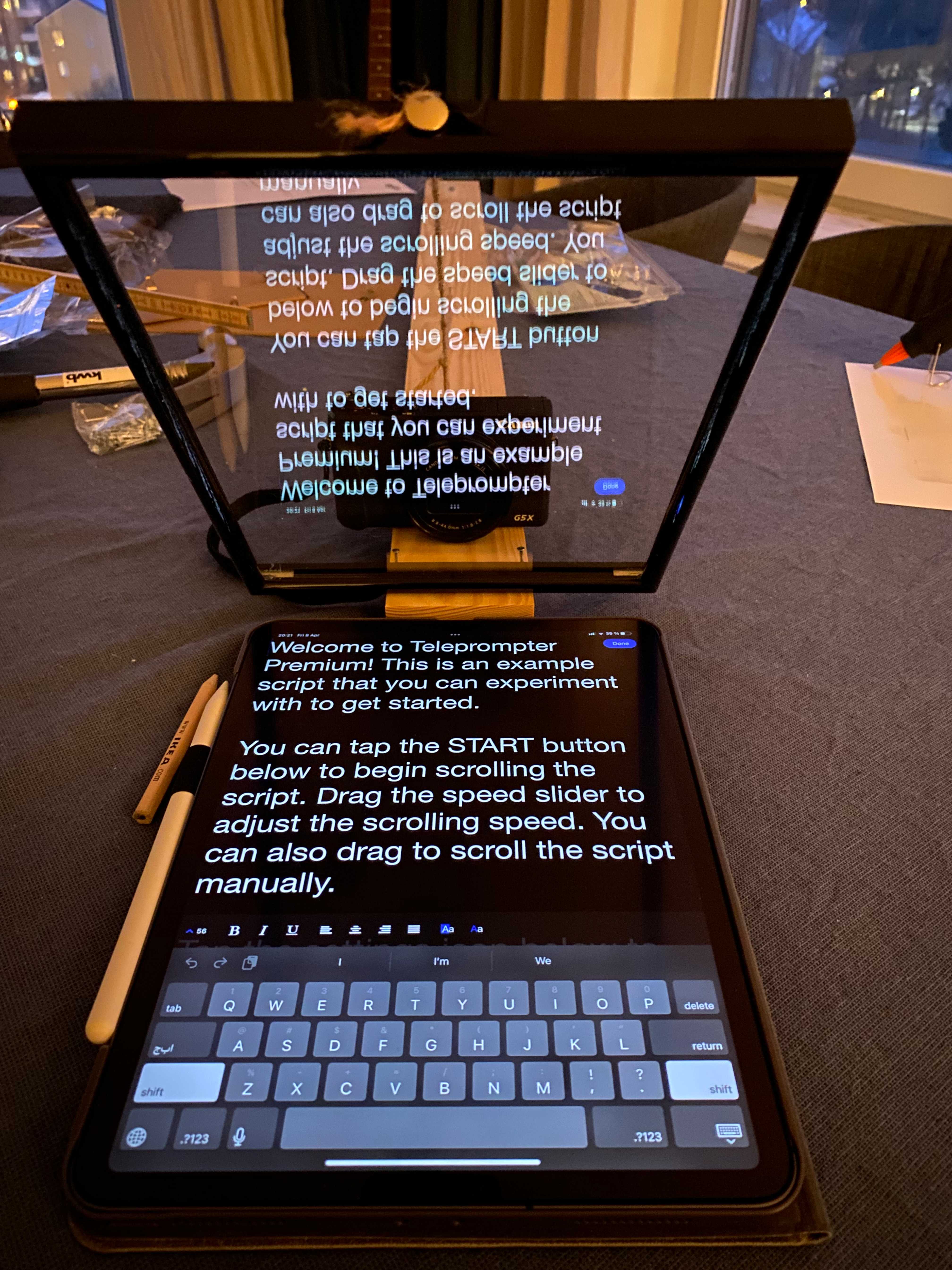
Off to IKEA I went. I grabbed a $2 picture frame, raided my scrap material bin, and got to work. Within minutes, I had a prototype. I slid my iPad inside, fired up a script, and, voilà, it worked … sort of.
The text was fuzzy. It looked like my prototype had had a glass to many and developed double vision. Every letter had a ghostly shadow, making it not impossible but hard to read - especially for longer texts, it would be hard on the eyes. It turns out, regular glass reflects light twice - once on each side of the plate. Who knew? (Apparently, not me.)
Back to the Drawing Board (or, more accurately: online research)
I did what any self-respecting DIYer would do: I Googled it. And that’s when the reality hit. Teleprompters don’t use just any glass. They use special glass (beam-splitting glass, to be precise) which is about as cheap as a unicorn’s tears. My $2 prototype suddenly looked like a sad, fuzzy joke.
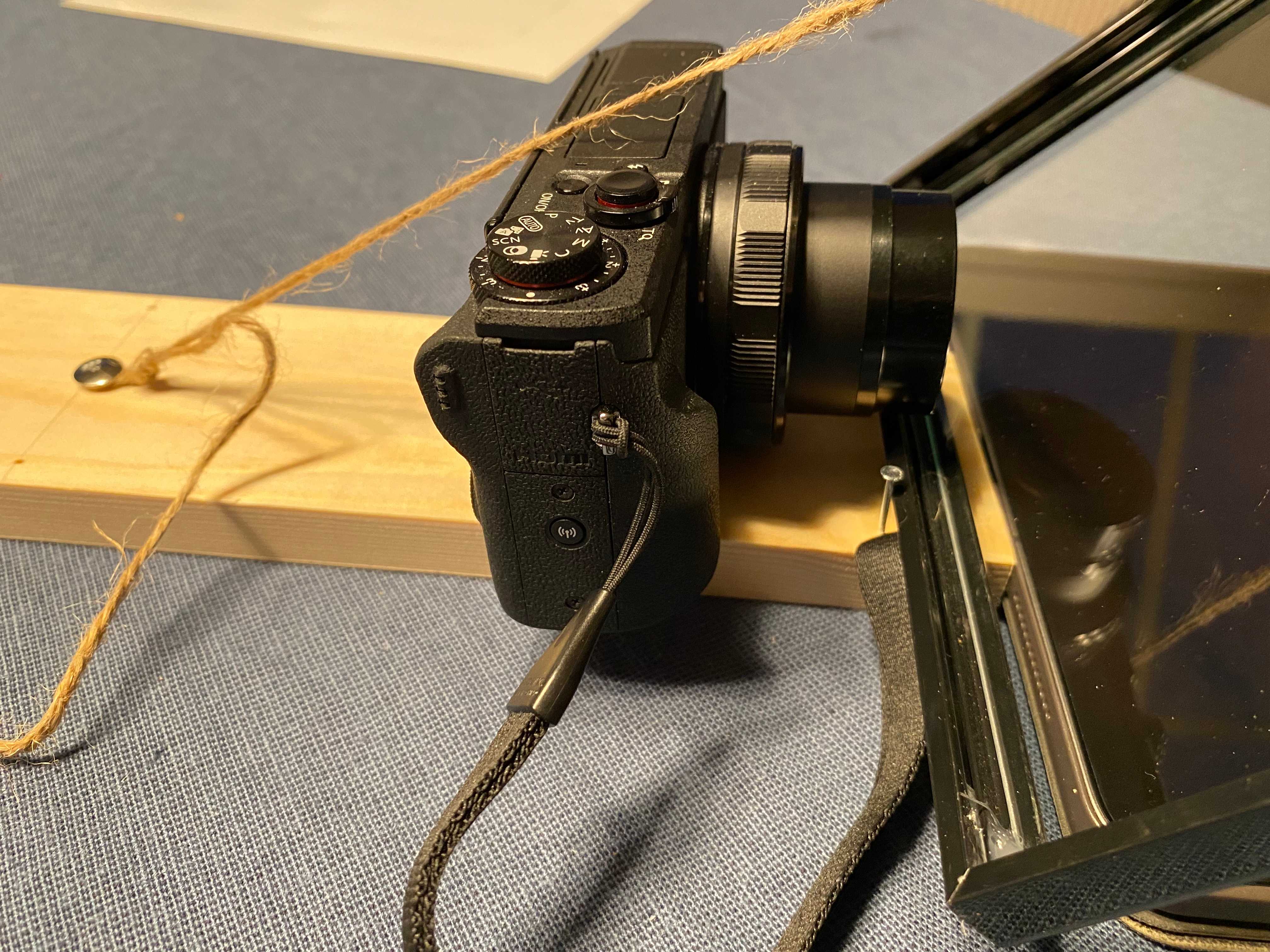
Then there were the screws. Imperial screws, to be exact. If you’ve ever tried to find Imperial screws in Sweden, you know it’s like hunting for a snowball in the Sahara. The threading is different (UNC vs. UFC, in case you’re curious), and metric screws just won’t cut it. My grand plan was crumbling faster than a cookie in milk.
The Realization
Here’s what I learned:
- The price tag isn’t just for show. Most of the cost of a commercial teleprompter comes from that fancy glass. It’s not just a gimmick—it’s the difference between crisp text and a blurry mess.
- Desk research only gets you so far. You can watch all the YouTube tutorials you want, but until you actually try something, you won’t know what you don’t know.
- Failure is just fast-track learning. My prototype didn’t work, but it taught me more in an hour than I’d learned in days of reading. And that’s a win.
The Takeaway
I could’ve spent weeks researching, planning, and obsessing over building the “perfect” teleprompter. Instead, I spent $2 and an afternoon. I didn’t get what I wanted, but I got something better: fast, cheap, and invaluable lessons.